
Accessing hearing health care means working with a licensed professional who evaluates your hearing, recommends appropriate devices, and provides ongoing support to ensure those devices fit correctly and perform well in your daily life. Unlike buying a product off the shelf, professional hearing aid services involve a relationship with an audiologist or hearing instrument specialist who customizes technology to your specific hearing loss pattern, lifestyle needs, and budget.
Most people spend weeks researching hearing aids online but overlook the care component that determines whether those devices actually help. A hearing aid is only as effective as the professional fitting and programming behind it. The right provider uses advanced diagnostic equipment to measure exactly how you hear across different frequencies, then programs devices to compensate for those specific gaps. They also teach you how to use the technology, adjust settings as your hearing changes, and troubleshoot issues that inevitably arise.
This process takes time. Expect at least two to three appointments in the first few months, with each visit building on the last. The initial evaluation typically lasts 60 to 90 minutes and includes comprehensive testing. The fitting appointment involves precise adjustments while you’re wearing the devices, often using real-ear measurements to verify that sound reaches your eardrum at the correct levels.
Quality hearing health care in 2026 goes beyond the transaction of selecting a device. It’s about finding a provider who explains options clearly, respects your concerns, and commits to follow-up care without hidden fees. The steps ahead will show you exactly what to prepare, what to expect, and how to verify you’re receiving the expert support you deserve.
Understanding What Hearing Aid Services Include
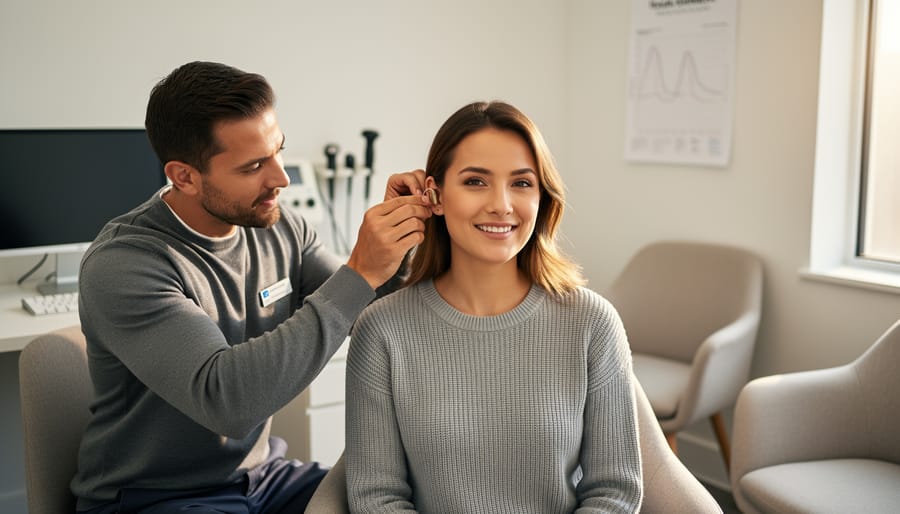
When you invest in hearing aid services, you’re getting far more than a device in a box. Professional hearing health care encompasses a comprehensive support system designed to address your unique hearing challenges and adapt as your needs change over time.
A complete hearing aid service program typically includes several interconnected components:
- Comprehensive diagnostic hearing assessments using calibrated equipment
- Professional device fitting and precision programming matched to your hearing profile
- Multiple follow-up adjustment appointments during your adaptation period
- Regular maintenance, cleaning, and performance checks
- Troubleshooting support when issues arise
- Counseling on communication strategies and realistic expectations
- Software updates and technology tune-ups as needed
- Warranty service coordination and repair management
The initial hearing assessment goes beyond a simple hearing test. Professionals evaluate how you hear across different frequencies, assess your speech understanding in quiet and noisy environments, and examine your ear health. This detailed information guides every decision about which technology features will actually benefit your daily life.
Professional fitting involves more than inserting devices in your ears. Your hearing care provider programs the hearing aids based on your specific hearing loss pattern, adjusts the physical fit for comfort during extended wear, and teaches you essential handling techniques. This precision matters because even identical hearing loss patterns can require different programming approaches depending on individual listening preferences.
Follow-up care addresses the reality that initial settings rarely feel perfect right away. Your brain needs time to adjust to amplified sound, and you’ll discover situations where modifications would help. Quality providers expect you to return multiple times during the first few months, refining settings based on your real-world experiences rather than just test-booth measurements.
This ongoing relationship distinguishes professional care from simply purchasing devices online. Your hearing changes gradually, your lifestyle evolves, and technology advances. Regular appointments ensure your hearing aids continue delivering optimal benefit rather than slowly becoming less effective as circumstances shift.
What You’ll Need Before Your First Appointment
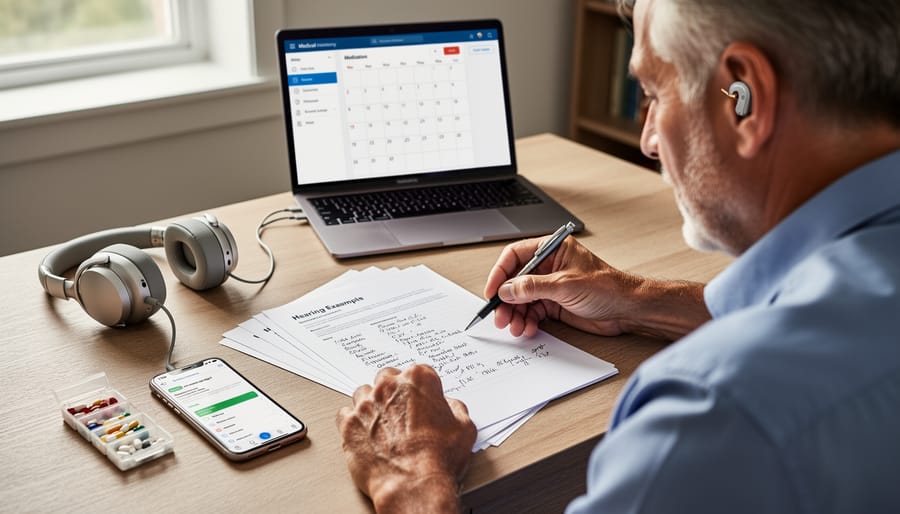
Walking into your first hearing appointment well-prepared helps your audiologist understand your unique situation and recommend the right solutions from day one. Gathering a few key items beforehand takes just minutes but significantly improves the quality of care you’ll receive.
Start with your medical history, especially any conditions that might affect hearing, diabetes, heart disease, frequent ear infections, or previous ear surgeries. Bring a complete list of medications you’re currently taking, including over-the-counter drugs and supplements. Some medications can impact hearing, and this information helps your professional identify potential causes of hearing changes and avoid complications with treatment.
Your insurance card and information about hearing aid coverage should come along too. Many plans include hearing benefits you might not know about, and your provider can help you understand what’s covered before making decisions. If you have previous hearing test results from any source, bring those as well. Even old results give valuable baseline information about how your hearing has changed over time.
The most valuable preparation is documenting your real-world hearing challenges. Where do you struggle most, restaurants, meetings, phone calls, watching television? Which sounds or voices are hardest to understand? Do you have trouble hearing in background noise or quiet settings? These specific details paint a picture that pure test results can’t capture.
Don’t worry if you can’t answer every question perfectly or if your hearing challenges are hard to describe. Your audiologist is trained to ask the right follow-up questions and piece together the full picture. The goal isn’t perfection but giving your provider enough context to tailor their recommendations to your actual life, not just a number on a test chart.
Important Considerations Before Beginning Your Journey
Before you begin seeking hearing aid services, you need to know when professional help requires a different starting point, and what to watch for as you choose a provider.
Some hearing changes signal underlying health issues that won’t improve with amplification alone. Sudden hearing loss that develops over hours or days is a medical emergency requiring immediate evaluation. Discharge from the ear canal, whether clear or bloody, often points to infection or eardrum damage. Dizziness accompanying hearing loss can indicate inner ear disorders that need diagnosis before fitting devices. Even significant hearing differences between ears warrant medical examination to rule out treatable causes or serious conditions.
Beyond medical considerations, recognize red flags when evaluating hearing care providers. High-pressure sales tactics, limited-time offers, same-day purchase requirements, or aggressive discounting, suggest a focus on transactions rather than your hearing needs. Be wary of providers who recommend the same device to everyone without thorough assessment or who lack proper credentials. Licensed audiologists and hearing instrument specialists undergo extensive training; verify credentials before committing. Avoid providers who dismiss your concerns, refuse to explain technology options clearly, or won’t provide written cost breakdowns including all services.
Set realistic expectations about outcomes and timing. Most people need two to four weeks to adjust to new hearing aids, with multiple appointments for programming refinements. Your brain requires time to reinterpret sounds it hasn’t processed clearly in months or years. Quality providers explain this adjustment period upfront and schedule follow-up visits without additional fees. If a provider promises instant, perfect hearing or downplays the adaptation process, that’s a warning sign. The goal is improved hearing and communication in real-world situations, achieved through partnership between you and your provider, not a quick-fix product sale.
Taking time to protect your hearing means addressing medical concerns first and choosing providers who prioritize your long-term success over immediate sales.
Step-by-Step: How to Get the Right Hearing Aid Services
Step 1: Find an Independent Hearing Aid Professional
The foundation of quality hearing care starts with finding the right professional. Begin by searching for independent hearing aid dispensers or audiologists in your area, these professionals aren’t tied to specific manufacturers and can recommend from a full range of technologies matched to your needs, not sales quotas.
Look for providers with proper credentials. Audiologists hold Au.D. (Doctor of Audiology) degrees, while hearing instrument specialists have state licensure and specialized training. Check their licenses through your state’s licensing board website to confirm they’re current and complaint-free.
When you call to schedule, ask three essential questions: “What hearing aid brands and technology levels do you offer?” (A wide selection signals they’ll match devices to you, not force what they have in stock.) “How do you stay current with new technology?” (Look for answers about continuing education and manufacturer training.) “What does your follow-up care include?” (Quality providers build long-term relationships, not just quick sales.)
Independent professionals often spend more time on personalized fitting and adjustment because they earn through service quality rather than device volume. They’re also more likely to offer trial periods and flexible return policies, giving you confidence that your investment will truly work for your life.
Step 2: Complete Your Comprehensive Hearing Assessment
During your comprehensive hearing assessment, a hearing care professional will conduct several tests to map your unique hearing profile. The entire evaluation typically takes 60 to 90 minutes.
The process begins with a conversation about your hearing challenges in different situations, family gatherings, phone calls, television viewing, which helps the professional understand your real-world needs. You’ll then move to a soundproof booth for pure-tone testing, where you’ll indicate the softest sounds you can hear at various pitches through headphones. This creates your audiogram, a visual chart showing exactly where your hearing differs from normal ranges.
Speech testing follows. You’ll repeat words at different volume levels to determine how well you understand conversation, not just hear it. This distinction matters because successful hearing aid fitting depends on improving speech clarity, not just making things louder.
Additional tests may include tympanometry (checking middle ear function) and otoacoustic emissions testing (assessing inner ear health). Some professionals also conduct real-ear measurements to see how sound behaves in your specific ear canal.
The results reveal which frequencies you’re missing, whether hearing loss affects one or both ears, and what type of amplification will help most. This data becomes the foundation for selecting and programming hearing aids matched precisely to your needs.
Step 3: Review Your Options and Make an Informed Decision
Your hearing care professional will present hearing aid options specifically matched to your hearing test results and daily listening needs. They’ll explain which features address your particular challenges, whether that’s difficulty in noisy restaurants, trouble hearing phone conversations, or keeping up in group settings.
Expect a clear explanation of technology levels and what each offers. Basic models handle straightforward hearing loss, while advanced options provide features like automatic environment adjustment, Bluetooth connectivity, and rechargeable batteries. Your professional should connect these features to your lifestyle, not just recite technical specifications.
Budget matters, and good providers discuss it openly. They’ll explain warranty coverage, what service packages include, and whether insurance or financing options apply. Quality professionals never pressure immediate purchase or claim limited-time offers. They recognize this decision affects your daily life and encourage you to think it through.
Ask questions about anything unclear. Request a comparison of two or three recommended models rather than feeling overwhelmed by every option available. A trustworthy provider wants you confident in your choice, knowing it genuinely fits your hearing needs and practical circumstances.
Step 4: Get Your Devices Properly Fitted and Programmed
Your hearing aid professional will begin by physically placing the devices in your ears to ensure they fit comfortably and securely. For custom devices, this means verifying the ear mold or shell sits properly without pressure points or gaps. For receiver-in-canal styles, they’ll select the right dome size and position the receiver correctly in your ear canal.
Next comes programming. Using specialized software connected to your devices, the professional loads your hearing test results and adjusts amplification frequencies to match your specific hearing loss pattern. This isn’t guesswork, it’s precision calibration based on your audiogram. They’ll verify the programming using real-ear measurements, placing a tiny microphone in your ear canal to confirm the hearing aid delivers the right sound levels exactly where you need them.
You’ll then learn the essentials: how to insert and remove your devices correctly, change batteries or charge them, adjust volume if needed, and handle basic cleaning. Your professional will demonstrate each step and watch you practice until you’re confident. They’ll also show you how to use any wireless features or smartphone apps that control your devices.
This appointment typically takes 60 to 90 minutes, don’t rush it.
Step 5: Attend Follow-Up Adjustments
Your first fitting appointment isn’t the finish line, it’s the starting point. Expect to return for at least two or three follow-up visits during your first few months, and understand that this is how quality hearing care works, not a sign something went wrong.
These appointments matter because your brain needs time to adjust to amplified sound. What feels perfect in a quiet office might sound overwhelming in a restaurant or too soft during phone calls. During your adjustment period, keep notes about specific situations where hearing feels off: “TV sounds tinny at this volume” or “struggle to hear my grandkids in the kitchen.”
When you return, your professional uses this real-world feedback to fine-tune your settings. They might adjust frequency responses for certain environments, modify compression ratios, or enable features you weren’t ready for initially. Each visit typically takes 15 to 30 minutes.
Come prepared to describe what you’re experiencing, not just say “it’s not working.” The more specific you are, the more precisely they can help.
Step 6: Establish Your Ongoing Care Routine
Schedule follow-up appointments every six to twelve months even when everything seems fine. These check-ins let your provider verify performance, clean components you can’t reach, and update software as manufacturers release improvements.
Between visits, establish a daily cleaning routine your audiologist demonstrates. Wipe devices nightly, check for wax buildup, and replace filters as directed.
Ask about extended care packages that bundle cleanings, adjustments, and minor repairs. Many providers offer plans that eliminate surprise costs while keeping your technology performing optimally.
Build rapport with your provider’s office. When you know the staff and they know your history, getting quick help becomes easier.
How to Know Your Hearing Aid Services Are Working

You’ll notice real improvements in specific situations. Conversations in restaurants become clearer, you catch more of what people say without asking them to repeat, and you feel comfortable wearing your devices all day without physical irritation. Your confidence grows in meetings, family gatherings, and even challenging environments like understanding hearing with masks. These concrete changes tell you the fitting is working.
Track your experiences during the first few weeks. Note which situations still feel difficult and which have improved. Share these observations at your follow-up appointments so your provider can make targeted adjustments. Most people need two to four fine-tuning sessions before everything clicks, and that’s completely normal.
Request additional help if you’re experiencing persistent feedback (whistling sounds), physical discomfort, or unclear speech even in quiet rooms. These issues usually require quick personalization fixes through programming changes or physical adjustments. Don’t wait months hoping problems resolve themselves.
Regular maintenance keeps services working well. You’ll need to change hearing domes monthly, replace filters when needed, and attend periodic checkups even when everything seems fine. Your provider monitors your hearing over time and ensures your devices continue matching your needs.
Consider technology upgrades when your current devices no longer meet your lifestyle demands or when your hearing changes significantly. Advances in latest hearing tech might offer meaningful benefits after you’ve had your current pair for several years. Your provider will recommend upgrades based on clinical need, not sales pressure, and help you understand what newer features could genuinely improve your daily experience.
Common Questions About Hearing Aid Services and Care
The mechanics of hearing aid services often raise practical questions, especially when you’re new to professional hearing care. Understanding what to expect, and what’s normal versus concerning, helps you make the most of your investment and maintain a productive relationship with your provider.
How often should I bring my hearing aids in for professional servicing?
Most professionals recommend check-ups every six months, though you might need more frequent visits during your first year or if you notice performance changes. Regular cleanings and performance checks prevent small issues from becoming major problems.
What’s typically included in service packages versus what costs extra?
Standard packages usually cover routine cleanings, programming adjustments, minor repairs, and follow-up appointments for a set period (often two to three years). Battery replacements, major component repairs, loss or damage coverage, and extended warranties typically cost extra.
Can I switch to a different provider if I’m not satisfied with my current one?
You’re never locked in, though switching can be complicated if your devices were purchased recently through a bundled service package. Independent professionals can often service devices purchased elsewhere, but manufacturer-specific programming may limit options.
What happens when my hearing changes over time?
Your provider will conduct annual hearing assessments to track changes and reprogram your devices accordingly. Many modern hearing aids can be adjusted for mild to moderate progression without needing replacement, though significant changes may eventually require new technology.
Repair situations deserve special attention. If your device stops working, contact your provider immediately rather than attempting fixes yourself. Most offices offer loaner devices while yours are being repaired, which can take anywhere from a few days for simple issues to two weeks for manufacturer repairs. Keep your warranty and service agreement paperwork accessible so you know what’s covered.
The relationship between you and your hearing care provider works best when it’s ongoing rather than transactional. Don’t hesitate to call between scheduled appointments if something doesn’t feel right. Professionals expect questions and adjustments as you adapt to devices and as your needs evolve. You’re paying for expertise and support, not just equipment.
Getting quality hearing aid services is more than a healthcare decision, it’s an investment in staying connected to the people and moments that matter most. You now understand what professional care involves, what to bring to your first appointment, how to identify qualified providers, and what the step-by-step journey looks like from evaluation through ongoing support.
The path forward doesn’t require you to become a hearing technology expert or navigate complicated systems alone. Independent hearing professionals exist precisely to guide you through this process, customize solutions to your specific needs, and provide the ongoing adjustments that make hearing aids truly work for your life. They’ve helped thousands of people through exactly what you’re experiencing.
If you’ve been putting off addressing your hearing challenges, you’re now equipped with the knowledge to move forward with confidence. You know what to expect at each stage, what questions to ask, and what good care looks like. The difference professional services can make, clearer conversations with loved ones, easier participation in social activities, reduced listening fatigue, is within reach.
Schedule that initial consultation. Bring your questions. Trust the process. Better hearing isn’t just about the technology you wear; it’s about the expert guidance and personalized support that helps you hear your best.