
The most effective way to communicate with someone who has hearing loss comes down to four habits: set the scene, speak clearly, confirm understanding, and use supportive technology. None of it takes special training. Most people can start using these methods in the next conversation, and the first improvements often show up within minutes.
Why does this work? Hearing loss rarely means sounds are simply too quiet. More often, speech arrives blurry, especially when there’s background noise, a turned head, or a fast talker. Small changes remove those obstacles. Facing someone in good light lets them use lip movements and facial expressions as extra clues. Slowing down gives their brain time to piece words together. A quick check, like asking them to repeat back the plan, catches misunderstandings before they grow.
This guide is for people with hearing loss, their families and caregivers, and professionals who support them. You’ll find the tools worth having, a few safety points, an ordered process you can follow, and ways to check that it’s working. We also cover trickier moments like phone calls, group dinners, and a loved one who isn’t ready for hearing aids.
Throughout, our advice stays independent and practical, with a clear eye on how advanced hearing technology can make everyday conversations easier. You don’t have to figure this out alone.
What You’ll Need: Tools and Supports for Easier Conversations

Hearing Technology That Does the Heavy Lifting
Modern hearing aids do far more than make sound louder. Today’s devices work in the background to make conversation easier, and the latest hearing tech is built around that goal.
Noise management is a good example. Directional microphones focus on the voice in front of you while softening sound from the sides and behind. Research on directional benefit in noise shows that this focus can help people follow speech in busy places, though the amount of help varies from person to person.
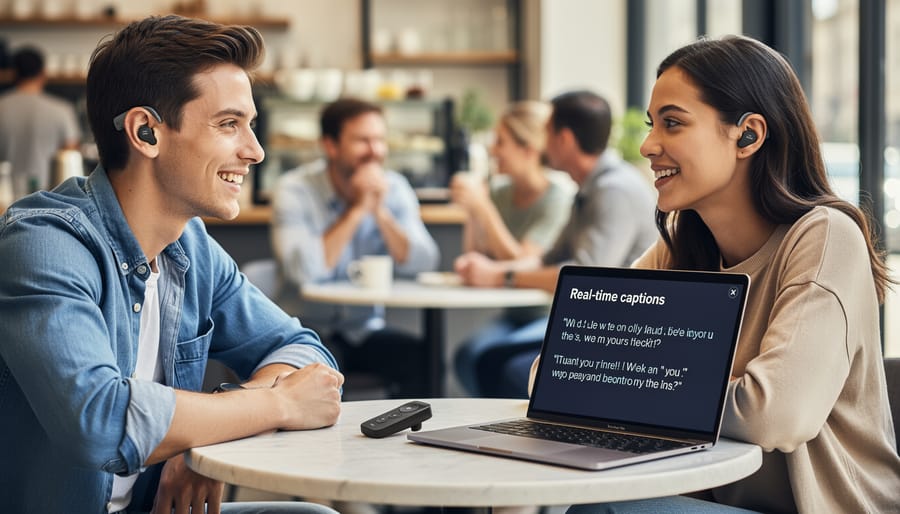
Streaming is another big help. Many hearing aids connect through Bluetooth, which means phone calls, video chats, and TV audio can go straight to your ears. You skip the room echo and hear the voice more clearly.
For tougher settings, a remote microphone can be clipped to a speaker’s collar or placed on a restaurant table. It sends their voice right to your hearing aids, even across a noisy room.
All of this works best when it’s set up for you. An independent hearing care professional can fit your devices, fine-tune the settings to your hearing and your daily routine, and adjust them as your needs change.
Before You Begin: Safety, Comfort, and When to Pause
Good communication habits are most effective when you know their limits. A few situations call for extra care, and a little planning keeps everyone safe and comfortable.
Some information should never rely on hearing alone. Emergencies, medical appointments, medication instructions, and safety alerts all fall into this group. Even with excellent hearing aids and perfect speaking habits, a missed word could matter here. Ask for a visual or written confirmation, like a printed dosage sheet, a text message, or a note jotted down and read back. Smoke alarms with flashing lights or bed shakers add another layer of protection at home.
Pay attention to comfort, too. Listening takes real effort, and fatigue builds faster than most people expect. Signs it’s time for a pause include irritability, losing the thread of the conversation, headaches, or nodding along without really following. None of this is a failing. It’s simply your brain asking for a rest. Step into a quiet room for a few minutes, take a short walk, or agree on a gentle signal that means “I need a break.”
Finally, trust your own sense of change. If hearing seems different from last month, or a trusted hearing aid no longer helps the way it did, reach out to an independent hearing care professional. Early adjustments often make a big difference.
Step-by-Step: How to Hold a Clear, Comfortable Conversation

Set the Scene: Noise, Lighting, and Positioning
Start with the room, because a good setup does half the work before anyone says a word.
Turn off the TV, radio, or running dishwasher. Background noise competes with speech, and even well-fitted hearing aids have to work harder when several sounds arrive at once. At a restaurant, ask for a booth or a corner table away from the kitchen and speakers. Choose the quieter hours if you can.
Next, sit face to face, ideally at the same eye level and about three to six feet apart. Looking at each other gives the listener extra clues. Lip movements, facial expressions, and gestures all help the brain fill in sounds that are hard to hear, and many people with hearing loss rely on these cues more than they realize.
Lighting matters just as much. Make sure the light falls on the speaker’s face, not behind them. A speaker standing in front of a bright window becomes a silhouette, and their lips and expressions disappear. If the sun is behind you, simply move or close the curtains.
A few seconds of setup can save a lot of repeating later.
Speak So You Can Be Understood
Speaking clearly doesn’t mean speaking loudly. Shouting can actually distort your words and make lip movements harder to read, so aim for a natural voice, just a little slower and a little more deliberate than usual. Aim to pause briefly between thoughts, which gives the listener’s brain a moment to catch up with what they just heard.
Keep your hands, a coffee cup, or your phone away from your mouth while you talk. Anything covering your lips takes away visual clues the listener may be relying on. The same goes for face coverings, and the effect of face masks hearing clarity is a good reminder of how much we all depend on seeing a speaker’s mouth.
If your message gets missed, resist the urge to repeat the same words louder. Try rephrasing with different words instead. A sentence like “Dinner’s at six” might land more easily as “We’re eating at six o’clock tonight.” Different sounds can be easier to catch than the ones that were lost the first time.
Many of us fall into habits like mumbling when we’re tired or turning away mid-sentence. That’s completely normal, and gentle awareness is all it takes to change them.
Confirm Understanding Without Awkwardness
Checking that your message landed doesn’t have to feel like a quiz. The trick is to make it sound like teamwork rather than testing.
Try asking, “Just so we’re on the same page, what’s our plan for Thursday?” This invites the listener to restate the key point in their own words, and it works well for everyone. If you’re sharing something important, like a time, an address, or a medication change, follow up in writing. A quick text or a note on the fridge saves worry later.
Set a relaxed tone from the start. Saying “Stop me if I go too fast” lets the listener know that “I missed that” is perfectly welcome, and no one needs to nod along.
If you’re the one with hearing loss, you can shape the conversation too. Be specific about what helps: “Could you say that a different way?” works better than “What?” You might add, “I caught the first part, just not the day.” Asking for exactly what you need keeps conversations moving and takes the pressure off everyone.
Adapting Your Approach: Phone Calls, Group Settings, and Special Situations
Tougher listening settings call for the same core habits, with a few smart adjustments. Here is a quick guide by situation:
- Phone calls: Switch to video when you can so faces are visible, turn on live captions, and stream the call straight to your hearing aids.
- Group dinners: Choose a corner table, sit with your back to the wall, and ask people to take turns speaking.
- Workplace meetings: Request an agenda and captioning ahead of time, and sit where you can see everyone’s face.
- Medical appointments: Bring a trusted companion, tell staff about your hearing loss at check-in, and ask for key instructions in writing.
Caregivers supporting older adults can help by arriving early, scouting the quietest seat, and gently repeating key points afterward. If a loved one’s device seems like a hearing aid not working problem, a quick visit to a hearing care professional often sorts it out. Families with children who have hearing differences can build the same habits into daily routines: get down to eye level, reduce background noise, and make sure the child can see your face.
Keep in mind that listening takes real effort. Following a conversation through hearing loss can leave you tired, tense, or foggy by the end of the day. That’s normal, not a personal failing. Build in short quiet breaks, and don’t hesitate to step outside for a few minutes. Protecting your energy helps you enjoy the conversations that matter most.
How to Tell Your Communication Strategies Are Working (and What to Do Next)
You’ll know your strategies are working when conversations start to feel lighter. Look for fewer “what?” and “could you repeat that?” moments, less strain at the end of a chat, and more relaxed, natural back-and-forth. Maybe dinner with family no longer leaves you exhausted, or a loved one stops nodding along and starts joining in.
Try keeping a simple note for a week or two. Jot down which situations felt easy and which felt hard. Patterns tend to show up quickly, such as noisy restaurants, group gatherings, or phone calls.
If things aren’t improving, change one thing at a time. Move to a quieter spot, adjust your lighting, slow your pace, or try a captioning app for calls. Small tweaks often make the biggest difference.
If you’re still struggling, it may be time to check in with a professional. A hearing evaluation can show whether your hearing has changed, and a fine-tuning visit can adjust your hearing aids to better match your daily life. Independent hearing care professionals can tailor settings to your needs and suggest assistive devices you may not have considered. If you’re not sure where to begin, this guide can help you access hearing care with confidence.
Regular check-ins keep both your technology and your strategies up to date as your needs change.
Common Questions About Communicating With Hearing Loss
Many of the same questions come up again and again, so here are warm, straightforward answers to the ones we hear most.
Should I speak louder?
Usually, no. Shouting can distort words and make speech harder to follow, so a natural voice at a steady pace, with your face visible, works better. If someone asks for more volume, a slightly stronger voice is fine, but clarity matters more than loudness.
Is lip reading enough?
Not on its own, because many sounds look alike on the lips. Think of it as a helpful partner to listening, along with facial expressions, gestures, and good lighting.
How can I help a loved one who resists hearing aids?
Lead with patience and listen to their concerns, whether it’s looks, cost, or comfort. Suggesting a visit with an independent hearing care professional can help, since a good fit and modern features often ease those worries.
What if someone pretends to understand?
It’s more common than you’d think, often out of embarrassment. Try asking them to share the plan back in their own words, and follow up in writing for anything important.
Knowing when to seek professional help matters too. If hearing seems to change suddenly, gets worse, or conversations feel like a daily struggle, it’s time to book a hearing evaluation. An independent professional can check your hearing, fine-tune any devices, and suggest the right supports for your lifestyle.
Clear conversations aren’t built on one big fix. They grow from small, steady habits: facing each other, cutting down background noise, speaking naturally, and checking in without making it awkward. Add well-fitted hearing technology to that mix, and conversations get easier for everyone at the table, not just the person with hearing loss.
You don’t need to change everything at once. This week, pick one or two strategies and try them. Maybe you turn off the TV before a chat, or you ask a loved one to sum up the plan for Saturday. Notice what feels lighter, and keep what works.
If you want guidance that fits your life, an independent hearing professional can help you find and fine-tune the right solutions for your needs. You deserve conversations that feel comfortable, connected, and relaxed. Take that first small step today, and know that support is always within reach.