
Assistive technology for disability and rehabilitation encompasses specialized devices, software, and equipment that help people with physical, sensory, cognitive, or developmental disabilities regain independence, participate more fully in daily activities, and achieve rehabilitation goals. These tools range from simple adaptive utensils and mobility aids to sophisticated communication devices, environmental control systems, and sensory prosthetics that restore lost function or compensate for impairments.
The right assistive technology can transform rehabilitation outcomes and quality of life, but choosing appropriate solutions requires understanding both your specific needs and the rapidly evolving options available in 2026. For people with hearing loss, this might mean advanced hearing aids with Bluetooth connectivity and AI-powered sound processing. For those with mobility challenges, power wheelchairs with obstacle detection or exoskeletons that enable walking. For individuals with vision impairment, screen readers and smart navigation systems. The technology exists across every category of disability, and the key is matching the right tool to your unique situation.
We approach assistive technology from an independent expert perspective, recognizing that the best solution depends on your personal circumstances, not a one-size-fits-all recommendation. This article will guide you through the major categories of assistive technology, explain how different tools support rehabilitation and daily living, and provide practical advice for working with specialists to identify what will genuinely improve your life. Whether you’re beginning your search or refining existing solutions, understanding the current landscape empowers better decisions about the technology that supports your independence.
What Assistive Technology Really Means for Daily Independence
Assistive technology is any device, piece of equipment, software, or system that helps people with disabilities perform tasks they’d otherwise find difficult or impossible. This definition is deliberately broad because solutions vary wildly based on individual needs, from a simple grip aid that makes opening jars easier to smartphone apps that convert speech to text in real time.
Think of assistive technology as a bridge between what someone wants to do and the barriers preventing them from doing it. For one person, independence might mean hearing a conversation in a noisy restaurant. For another, it’s navigating their home safely after vision loss. These technologies don’t aim to “fix” people; they adapt environments and tasks to match individual capabilities.
- Assistive Technology
- Any tool, device, or system that helps people with disabilities perform daily activities, communicate, work, or participate in community life more independently.
- Adaptive Devices
- Equipment modified or specifically designed to accommodate physical limitations, such as eating utensils with built-up handles or voice-activated home controls.
- Rehabilitation Technology
- Specialized assistive technology used during therapy and recovery to help people regain skills, strength, or function after injury or illness. These tools often bridge temporary needs during the rehabilitation process.
- Accessibility Tools
- Technologies that remove barriers in physical or digital environments, like screen readers for websites or ramps for buildings, ensuring equal access to spaces and information.
What makes assistive technology particularly powerful in rehabilitation is its role in active recovery. A person relearning to walk after a stroke might use parallel bars initially, then progress to a walker, and eventually rely on just a cane. Each tool supports a specific stage of rebuilding independence rather than creating permanent dependence.
The rehabilitation aspect matters because many people come to assistive technology during transition periods, after diagnosis, following an accident, or as a condition progresses. The right technology at the right time can mean the difference between frustration and progress, between isolation and continued participation in work, relationships, and activities that define quality of life.
Hearing Technology: Where Innovation Meets Personal Connection
Advanced Features That Actually Matter
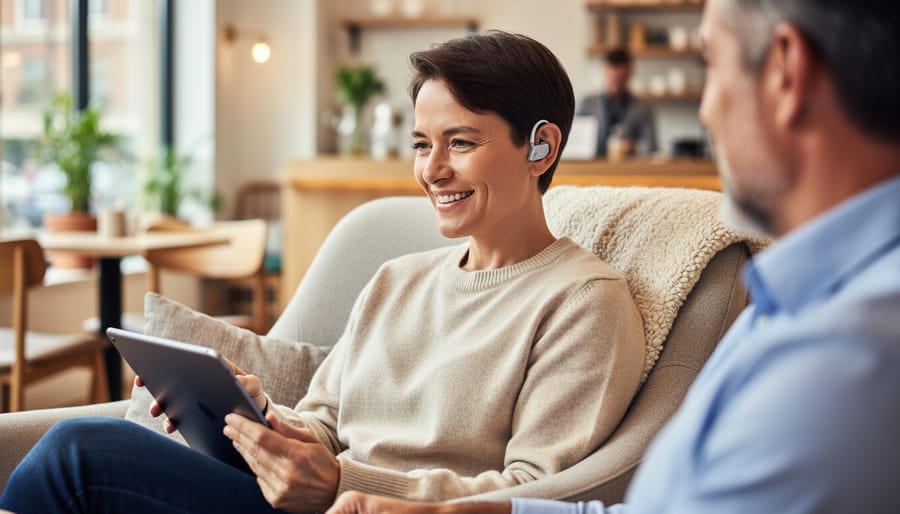
Modern hearing aids have evolved far beyond simple amplification, but not every feature matters equally in daily life. Understanding which technologies genuinely support rehabilitation and independence helps you focus on what counts.
Bluetooth connectivity stands out as transformative because it eliminates the frustration of straining to hear phone calls, video meetings, or television. Your hearing aids stream audio directly from smartphones, computers, and TVs, creating a clear sound pathway that bypasses background noise entirely. This direct connection supports rehabilitation by making communication practice easier and reducing the exhaustion that comes from constant listening effort.
AI-powered noise reduction has made complex sound environments dramatically more manageable. These systems analyze incoming sound in real time, distinguishing speech from background noise in restaurants, busy offices, or outdoor settings. The technology adapts automatically rather than requiring you to adjust settings manually, which means less cognitive load and more natural conversation flow during the adaptation period.
Rechargeable battery systems remove the fiddly task of changing tiny batteries every few days, a genuine barrier for people with limited dexterity or vision challenges. Overnight charging provides all-day power, making hearing aids easier to integrate into daily routines without interruption.
What matters most isn’t having every available feature but finding technologies that address your specific listening challenges and physical needs. Professional guidance ensures you invest in features that will genuinely support your rehabilitation goals rather than paying for capabilities you won’t use.
The Rehabilitation Journey with Hearing Devices
Adjusting to hearing devices takes time, patience, and the right professional support. Most people need several weeks to months before new hearing aids feel natural, your brain is relearning how to process sounds you haven’t heard clearly in years.
Expect an initial period where everything seems too loud or unfamiliar. Everyday sounds like refrigerator hum, rustling paper, or your own footsteps may feel overwhelming at first. This is normal. Your audiologist will schedule follow-up appointments to fine-tune settings as your brain adapts, gradually increasing amplification as your tolerance improves.
Professional counseling and follow-up make the difference between success and abandoned devices. Regular check-ins let you report what’s working and what isn’t, so your provider can adjust programming, address comfort issues, and guide you through challenges. Many people need three to five appointments in the first few months.
Rehabilitation isn’t just about the device, it’s about rebuilding listening skills. Your professional may recommend auditory training exercises or communication strategies to maximize benefit. Give yourself grace during this process. Small improvements compound over time, and most users report significant satisfaction once they pass the initial adjustment phase.
Beyond Hearing: The Broader Landscape of Assistive Technology
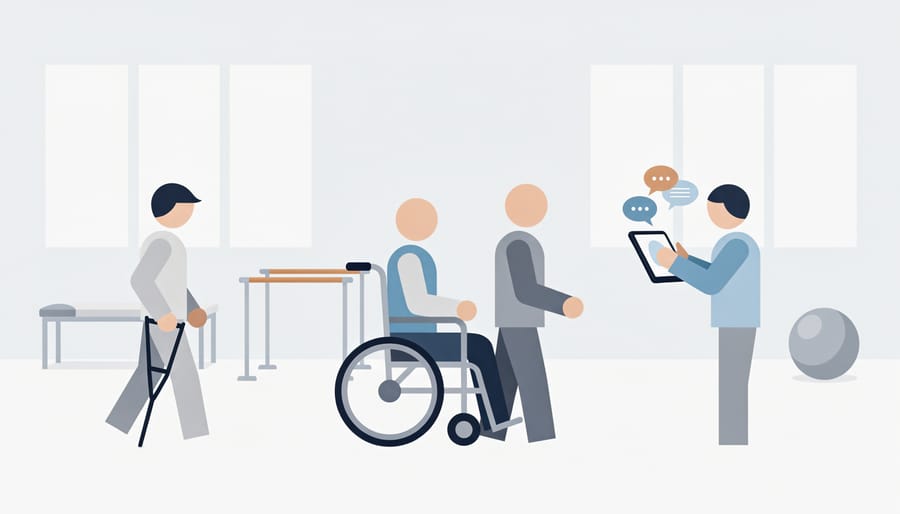
Assistive technology extends far beyond hearing solutions, encompassing a vast ecosystem of tools that support independence across every aspect of daily life. While each category addresses specific challenges, these technologies often work together, someone using a wheelchair might also benefit from communication devices and smartphone adaptations, creating a personalized support system that addresses their unique combination of needs.
Mobility assistive technology ranges from manual wheelchairs and walkers to sophisticated power mobility systems with environmental controls. Modern wheelchairs feature advanced seating systems that prevent pressure injuries, terrain-adaptive wheels for outdoor navigation, and even standing functions that support bone health and social interaction at eye level. Transfer aids, including patient lifts and transfer boards, enable safe movement between surfaces while reducing caregiver strain and injury risk.
Communication devices have transformed possibilities for people with speech impairments. Voice amplifiers help those with quiet voices project more effectively, while augmentative and alternative communication (AAC) systems range from simple picture boards to sophisticated speech-generating devices controlled by eye gaze, head movements, or single switches. These tools don’t just enable basic communication, they support education, employment, and meaningful relationships.
Vision support technology includes everything from traditional magnifiers to AI-powered smartphone apps that identify objects, read text aloud, and describe surroundings. Screen readers and refreshable braille displays enable computer access, while navigation aids help users move confidently through unfamiliar environments. Electronic mobility canes with ultrasonic sensors detect obstacles at head height, addressing gaps in traditional cane coverage.
Cognitive and learning support technologies assist with memory, organization, and information processing:
- Medication reminders that photograph pills and send alerts at scheduled times
- Visual timers and schedules that make abstract time concrete and manageable
- Text-to-speech software that supports reading comprehension and learning
- GPS tracking devices that provide safety and peace of mind for individuals with dementia
- Smart home systems that automate routines and reduce cognitive load
This interconnected landscape reflects an important truth: disability rarely fits into neat categories, and the most effective rehabilitation approaches recognize how different technologies complement each other. Someone recovering from a stroke might combine mobility aids for physical therapy, communication devices during speech recovery, and cognitive tools for managing appointments and medications, all working together to support their return to independence.
Where Professional Guidance Makes the Difference
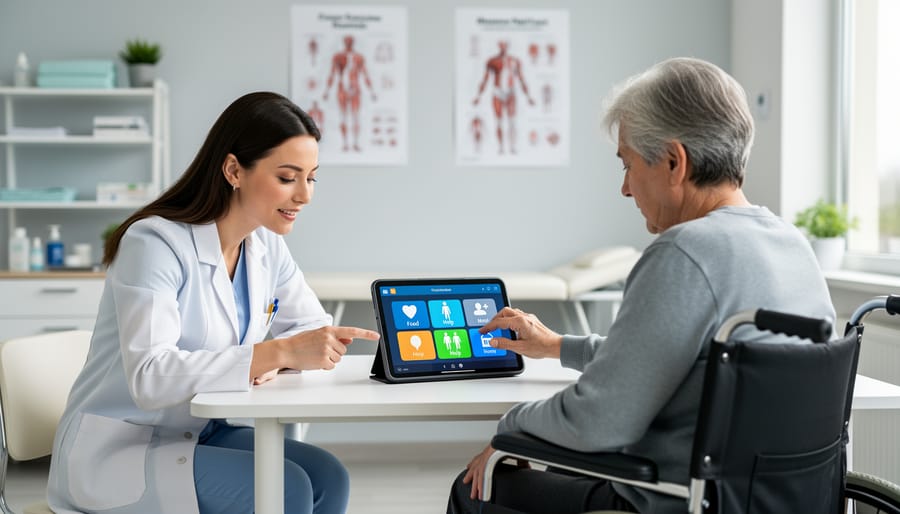
Buying assistive technology online feels straightforward, research features, compare prices, place an order. Yet this approach skips the most crucial element: professional assessment that matches technology to your specific needs, lifestyle, and rehabilitation goals.
Independent professionals bring expertise that no product review can replace. They assess your current abilities, understand your daily challenges, and identify which features will genuinely improve your function versus those that simply sound impressive. A hearing aid with advanced directional microphones matters tremendously if you attend meetings regularly, but may be irrelevant if your primary need is clearer television audio at home.
The assessment process reveals nuances that transform outcomes. Professionals evaluate factors like dexterity for operating controls, vision for reading displays, cognitive load for learning new interfaces, and environmental demands across different settings. They also consider how assistive technology integrates with devices you already use and whether your needs might evolve during rehabilitation.
Customization extends far beyond initial fitting. Professionals fine-tune settings based on real-world feedback, adjust as your abilities change, and troubleshoot issues that arise during daily use. This ongoing relationship proves especially valuable during rehabilitation, when your functional capacity and technology needs shift over weeks and months.
Perhaps most importantly, independent professionals maintain loyalty to your outcomes rather than particular brands or products. They recommend solutions based on what works for people with similar needs, warn you about common pitfalls, and connect you with additional support resources when technology alone isn’t enough.
The difference shows in satisfaction rates. People who receive professional guidance report significantly better outcomes and continued device use compared to those who self-select technology. Expert assessment doesn’t just help you buy the right device, it ensures that device actually improves your daily life.
Learning from Leaders: 2026 Assistive Technology Events
The assistive technology field thrives on collaboration and shared learning, and 2026 brings several significant gatherings where innovations take center stage. These events offer professionals a chance to see emerging technologies firsthand, while also providing valuable insights for individuals and families exploring solutions.
The CSUN Assistive Technology Conference remains the industry’s flagship event, with its 2026 Exhibit Hall running March 11 through 13 at the Anaheim Marriott. This conference draws manufacturers, researchers, and practitioners from around the world, showcasing everything from deep neural networks powering hearing devices to breakthrough mobility solutions. The exhibit floor becomes a living laboratory where attendees can test devices, compare features, and speak directly with developers.
| Event | Date | Location | Primary Focus |
|---|---|---|---|
| CSUN Assistive Technology Conference | March 11-13 | Anaheim Marriott, California | Comprehensive technology showcase |
| Assistive Technology Expo | March 10 | Columbia Metropolitan Convention Center | Regional solutions and demonstrations |
| Canadian Disability Tech Summit | November 18 | Exhibition Place, Toronto | Canadian innovations and policy |
Just ahead of CSUN, the Assistive Technology Expo takes place March 10 at the Columbia Metropolitan Convention Center, offering a more regional focus with hands-on demonstrations. Later in the year, the Canadian Disability Tech Summit arrives November 18 at Toronto’s Exhibition Place, bringing together innovators from across Canada to address both technological advances and the policies that support accessibility.
These gatherings matter because they accelerate progress. When professionals see what’s possible and share implementation strategies, that knowledge flows directly to the people they serve. While you don’t need to attend these events personally, knowing they exist reminds you that a dedicated community is continuously working to expand what assistive technology can accomplish.
Making Assistive Technology Work in Real Life
Funding and Access Options
Paying for assistive technology often feels overwhelming, but multiple pathways exist to make devices more accessible. Private insurance plans sometimes cover hearing aids and other assistive devices, though benefits vary widely, check your specific policy and ask whether they include hearing-related equipment.
Medicare traditionally offers limited coverage for assistive technology, though it does cover some items when deemed medically necessary. Medicaid programs vary significantly by state, with some providing comprehensive assistive technology benefits while others offer minimal support. Your healthcare provider can help determine what might be covered under your plan.
Nonprofit organizations and foundations frequently offer grants or low-cost programs for specific disabilities. The Lions Club, for example, has historically supported hearing-related needs. Veterans’ benefits may cover assistive technology for service-related disabilities.
Many providers offer trial periods before purchase, which proves invaluable when testing whether a device truly fits your life. This matters especially for hearing technology, where adapting takes time and circumstances like when face masks make it harder to communicate might require device adjustments.
Don’t hesitate to ask professionals about payment plans or refurbished equipment options, independent providers often work with clients to find workable financial solutions.
Getting Comfortable with New Technology
Starting with a new assistive device feels overwhelming at first, buttons to learn, settings to adjust, unexpected feedback sounds. That’s completely normal. Most people need several weeks to feel truly comfortable with new technology, and rushing the process often leads to frustration and abandoned devices.
Professional training makes an enormous difference during this adjustment period. Your audiologist or assistive technology specialist can demonstrate features step by step, answer questions specific to your daily routines, and adjust settings as you discover what works. Many people benefit from multiple short training sessions rather than one long introduction, allowing time to practice between visits.
Set realistic expectations for yourself. You won’t master everything immediately, and that’s fine. Focus first on basic functions you’ll use daily, then gradually explore advanced features as you gain confidence. Keep notes about questions that arise at home, your specialist expects and welcomes them.
Follow-up appointments aren’t optional; they’re essential. Your needs and preferences become clearer after living with the technology, and that’s when personalization changes everything. Fine-tuning based on real-world experience transforms a generic device into your customized solution, making the initial learning curve worthwhile.
What to Look for When Choosing Assistive Technology
Choosing the right assistive technology means looking past flashy features to find what genuinely fits your life. Start by thinking about your daily routines and where you need support most. The best device isn’t the one with the most advanced technology, but the one you’ll actually use every day.
Consider these specific factors when evaluating any assistive technology:
- Does it address your primary challenge without creating new complications in other areas of your life?
- Can you operate it independently, or will you need someone else’s help each time?
- Is professional support available locally for setup, adjustments, and troubleshooting?
- What’s the realistic learning curve, and do you have access to proper training?
- Can the technology grow with you if your needs change, or will you need to start over?
Professional support matters more than most people realize. A sophisticated hearing aid is only valuable if you have access to an audiologist who can fine-tune it to your specific hearing loss pattern and teach you when to change hearing aid domes for optimal performance. The same principle applies to all assistive technology: the device plus the professional relationship creates the solution.
Look for evidence of real-world effectiveness, not just manufacturer claims. Ask about trial periods so you can test the technology in your actual environment before committing. Pay attention to how the device fits into your existing routines rather than forcing you to build new ones around it.
Don’t let trends or pressure drive your decision. What works brilliantly for someone else might frustrate you daily. The right assistive technology should feel like it disappears into your life, supporting you quietly rather than demanding constant attention.
Living with disability presents real challenges, but you don’t have to face them alone or without support. The assistive technology landscape in 2026 offers more solutions, greater personalization, and better outcomes than ever before. Whether you’re navigating hearing loss, mobility limitations, communication barriers, or cognitive challenges, technology exists that can meaningfully improve your daily life.
The key is finding the right match for your specific situation. Generic solutions rarely deliver the independence and confidence you deserve. That’s where independent professionals make all the difference. These experts take time to understand your unique needs, lifestyle, and goals, then recommend technology that genuinely fits rather than pushing whatever’s newest or most profitable.
If hearing challenges are affecting your quality of life, professional guidance becomes even more critical. Modern hearing aids and assistive listening devices offer remarkable capabilities, but only when properly selected, fitted, and supported. The adjustment process matters as much as the technology itself.
Don’t let uncertainty keep you from exploring what’s possible. Independent hearing care professionals are committed to finding personalized answers that work for you. They’ll assess your hearing needs, explain your options in plain language, and provide the ongoing support that turns technology into real-world results.
Take that first step. Reach out to an independent hearing specialist who can help you discover how assistive technology might transform your daily experience. Your journey toward greater independence starts with a conversation.