
Request independent communication support before every viewing and inspection. Property Saviour specialists note that fire-damaged properties present unique safety challenges that demand crystal-clear communication. Bring a trusted companion, professional interpreter, or real-time captioning app to capture crucial details about structural damage, smoke residue, and electrical hazards that could be life-threatening if misunderstood.
Document everything in writing from the first interaction. Email all questions about the property’s fire history, repair estimates, and safety certifications rather than relying on phone calls. This creates a permanent record you can review carefully and protects your legal rights if disputes arise later. Request that inspectors and estate agents provide written reports with photographs, giving you time to process technical information about fire damage severity without pressure.
Install specialized assistive technology before starting your search. Modern hearing loops, smartphone apps with real-time transcription, and video relay services have transformed accessibility in 2026. These tools help you catch warning signs during negotiations that others might mention casually, like previous insurance denials or hidden smoke damage behind fresh paint.
Assert your legal protections early and confidently. The Equality Act requires reasonable adjustments throughout the buying process, including extra time to review contracts and alternative communication formats for critical safety documents. Fire-damaged properties involve complex disclosures about toxins, structural integrity, and previous emergency service reports. Missing even one detail could cost you thousands in unexpected repairs or, worse, put your safety at risk. Your hearing loss doesn’t diminish your right to complete, accessible information about every aspect of the property’s condition.
Why Hearing Support Matters When Buying Fire-Damaged Property
Buying a fire-damaged home demands constant, clear communication at every stage. Unlike typical real estate transactions, you’re not just evaluating cosmetic issues, you’re assessing structural integrity, smoke contamination levels, electrical system damage, and fire suppression aftermath. These technical evaluations happen through conversations with multiple specialists who use precise terminology to describe critical safety concerns.
During property walkthroughs, inspectors point out subtle damage indicators while explaining their significance. They might tap walls to demonstrate hollow spots where fire weakened supports, or describe the sound of compromised flooring. Missing these auditory cues can mean overlooking serious structural problems that impact both safety and renovation costs.
Contractor negotiations present another layer of complexity. You’ll discuss remediation timelines, material substitutions, and cost adjustments based on what workers discover as they tear into damaged areas. These conversations often happen amid construction noise, with contractors wearing masks or respirators that muffle their voices. A misunderstood estimate or unclear timeline can derail your entire renovation budget.
Insurance discussions require understanding nuanced policy language and coverage limitations. Representatives explain claim processes, depreciation calculations, and payout schedules that determine whether your restoration plans are financially viable. Phone calls and virtual meetings make these already complicated conversations harder to follow without proper hearing support.
Fire-damaged properties also attract multiple simultaneous stakeholders. On any given day, you might coordinate with environmental specialists testing for asbestos, electricians assessing wiring damage, plumbers checking water-damaged pipes, and structural engineers evaluating load-bearing elements. Each professional brings specialized knowledge communicated through detailed verbal reports.
The stakes are particularly high because fire damage often hides beneath visible surfaces. What an inspector hears when testing a support beam, or how a contractor describes the crackling sound of compromised materials, provides essential information that visual inspections alone can’t reveal. Without clear communication channels, you risk making decisions based on incomplete information about your future home’s safety and viability.
Communication Barriers You’ll Face (And How to Overcome Them)
On-Site Inspections and Safety Assessments
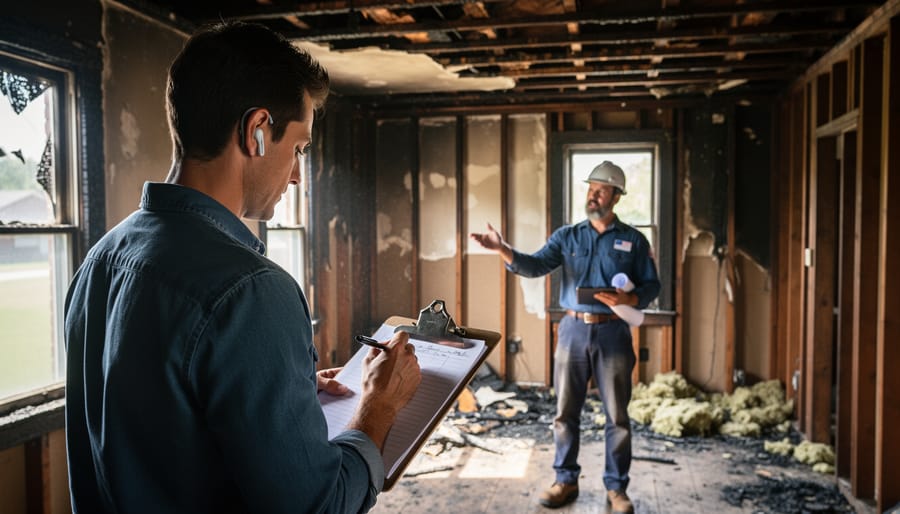
Fire-damaged properties present some of the toughest inspection conditions for people with hearing loss. Smoke residue and water damage create echo chambers where speech bounces unpredictably. Inspectors often wear respirators or N95 masks that muffle their voices, and structural damage means you’re navigating spaces with debris underfoot, generators running, and safety alarms beeping intermittently. These conditions make lip-reading nearly impossible and overwhelm even the best hearing aids.
Before the inspection, share basic communication do’s and don’ts with your inspector. Request written summaries of critical findings at each stage rather than relying solely on verbal walkthroughs. If your inspector turns away while explaining structural issues, ask them to face you and repeat key points. You’re entitled to reasonable accommodations under FHAwhich might include bringing a companion to take notes or scheduling extra time.
Consider using a remote microphone system clipped to the inspector’s collar. This transmits their voice directly to your hearing aids, cutting through ambient noise. Many professionals welcome this tool once you explain how it helps. Take photos and videos during the walkthrough so you can review visual details later, reducing pressure to catch every spoken word in real time.
Contractor and Restoration Meetings
Restoration meetings bring their own communication hurdles. You’ll juggle multiple contractors, electricians, framers, HVAC specialists, often simultaneously on site. Each has a different accent, speech pattern, and terminology. Without clear communication, you risk misunderstanding scope, timelines, or costs.
Request written estimates before every meeting. This gives you a reference point when discussing verbal proposals. Ask contractors to face you directly when speaking and to remove face masks temporarily during critical discussions about structural decisions or budget items. The face mask communication barriers that emerged during recent years remain relevant on active construction sites where safety protocols persist.
Record meetings on your smartphone with permission. You can replay sections where you missed details about load-bearing walls or electrical panel upgrades. Many contractors appreciate this, it creates accountability and reduces disputes about what was agreed.
Bring a trusted friend or family member to complex meetings. They can catch information you miss and ask clarifying questions. After each session, send a summary email confirming what you understood: “Just to confirm, you’ll replace the subfloor for $8,500 and complete it by March 15th.” This creates a written trail and gives contractors a chance to correct misunderstandings immediately.
Schedule meetings during quieter times when fewer workers are on site. Morning appointments before heavy equipment starts often provide better acoustic conditions than midday chaos.
Technology That Helps You Navigate the Process
Modern hearing technology offers features specifically designed for the challenging situations you’ll face when buying a fire-damaged home. Your hearing aids can become powerful tools during property tours, contractor meetings, and safety inspections if you know which capabilities to activate and how to use them effectively.
Bluetooth connectivity transforms virtual property walkthroughs. When your real estate agent conducts a video tour of the fire-damaged property, connecting your hearing aids directly to your phone or tablet streams the audio straight into your ears. This eliminates the echo and distortion common in phone speakers, letting you catch every detail about smoke damage locations, structural concerns, and restoration needs without asking for constant repetition.
Remote microphone systems prove invaluable during large property walkthroughs where you need to hear inspectors or contractors from across a room or in adjacent spaces. Clip the small wireless microphone to your inspector’s lapel, and their voice transmits directly to your hearing aids even when they’re examining the attic while you stand two floors below. This technology prevents the dangerous situation of missing critical safety warnings in a partially compromised structure.
| Hearing Aid Feature | Fire-Damaged Home Buying Scenario | Specific Benefit |
|---|---|---|
| Directional Microphones | Contractor meetings in noisy restoration sites | Focuses on speech from one person while reducing background construction noise |
| Wind Noise Reduction | Outdoor property assessments with damaged walls or missing windows | Eliminates whistling sounds and wind interference during exterior inspections |
| Smartphone Apps | Quick adjustments during multiple daily appointments | Instantly switch between programs optimized for different environments without touching devices |
| Rechargeable Batteries | Long days of inspections and contractor meetings | Prevents power failure during crucial negotiations or final walkthroughs |
Advanced noise reduction features matter more than ever in fire-damaged properties. Charred structures create unusual acoustics, with some walls missing and others reflecting sound unpredictably. Modern algorithms distinguish between speech and the constant background noise of fans, dehumidifiers, and debris removal equipment common at these sites. Your hearing aids can suppress these distractions while amplifying the contractor’s explanation of remediation plans.
If contractors speak too quietly or you’re dealing with someone who mumbles behind a mask, voice amplifiers can help them project their voice without shouting. These portable devices are particularly useful when working with multiple subcontractors who may not understand how to communicate effectively with someone who has hearing loss.
Speech-to-text apps on your smartphone work alongside your hearing aids as a backup. During complex insurance discussions or when reviewing detailed restoration timelines, these apps create a written record you can reference later, ensuring you didn’t miss any numbers, dates, or technical specifications that could affect your purchase decision.
Building Your Support Team
Finding the right professionals makes all the difference when you’re buying a fire-damaged home with hearing loss. Your support team should understand your communication needs from day one.
Start by interviewing real estate agents before committing. Ask specific questions: How do they prefer to communicate? Are they willing to provide written summaries after verbal discussions? Can they recommend contractors who’ve worked with clients who have hearing loss? The best agents will adapt without hesitation, using email for detailed information, texting for quick updates, and facing you directly during in-person conversations. They’ll also slow down naturally when explaining complex fire damage reports or renovation estimates.
Don’t hesitate to request a certified interpreter for critical meetings like home inspections, final walkthroughs, or closing appointments. Under the Americans with Disabilities Act, you have the right to effective communication during real estate transactions. Many title companies and real estate offices can arrange interpreters if given adequate notice, typically three to five business days. This ensures you catch every detail about structural damage, remediation costs, or contract terms that could affect your investment.
Your independent hearing aid professional becomes a key team member during this process. Schedule an appointment before you start house hunting to discuss the unique acoustic challenges ahead: echoey fire-damaged rooms, construction site noise, and multiple rapid-fire meetings. They can adjust your devices for these environments, recommend accessories like remote microphones for large property walkthroughs, and ensure you have backup batteries or charging solutions for long inspection days.
Consider adding a trusted friend or family member with good hearing to accompany you on property visits. They can catch details you might miss and serve as a communication backup during chaotic moments when multiple contractors are talking simultaneously about restoration timelines and costs.
Building this team upfront prevents miscommunication that could cost thousands in overlooked fire damage or misunderstood renovation requirements.
Your Rights and Accommodations
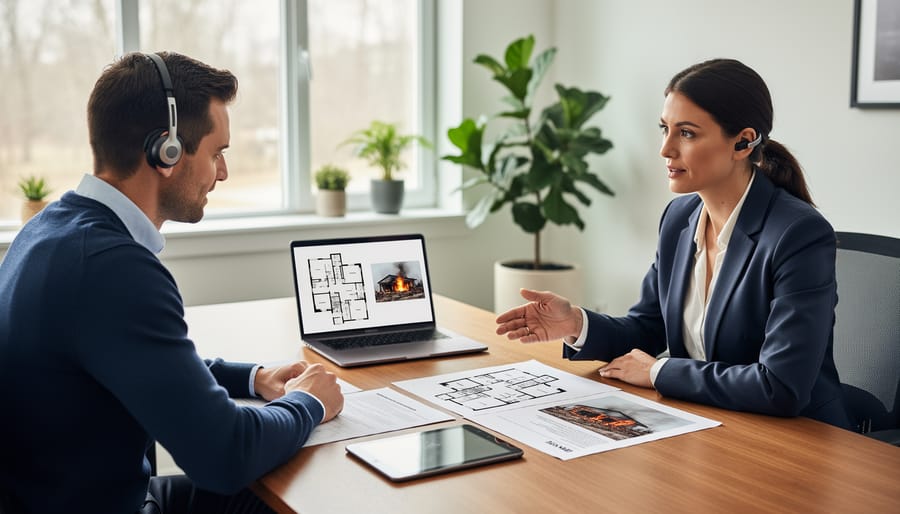
Federal law protects your right to equal access throughout the home buying process, even when purchasing fire-damaged property. The Americans with Disabilities Act (ADA) and Fair Housing Act establish clear protections that prevent discrimination based on hearing loss.
You can request reasonable accommodations at any stage of the transaction. These accommodations must be provided at no extra cost to you. Common requests include written summaries of verbal discussions during property walkthroughs, email recaps of phone conversations with sellers or agents, and extended time during inspections to review findings with visual aids. Real estate professionals and lenders cannot refuse these requests simply because they find them inconvenient.
During closings, you have the right to request a sign language interpreter or real-time captioning services. Title companies and attorneys must provide these accommodations, though you should make your request at least two weeks in advance to ensure availability. If you prefer conducting business via email or text rather than phone calls, that’s your right as well.
For fire-damaged property inspections, you can ask inspectors to face you directly when speaking, provide written reports before verbal walkthroughs, or use communication apps that transcribe speech to text in real time. Inspectors cannot charge extra fees for these accommodations or refuse to work with you because of your hearing needs.
If someone denies your accommodation request or treats you differently because of your hearing loss, document everything. Note the date, person involved, and specific language used. You can file complaints with the Department of Housing and Urban Development within one year of the incident. Many cases get resolved quickly once buyers assert their legal rights, so don’t hesitate to speak up when you need support.
Preparing Your Hearing Aids for the Journey Ahead
Before you start touring fire-damaged properties and meeting with contractors, schedule a consultation with an independent hearing aid professional to prepare your devices for the unique demands ahead. Fire-damaged homes present acoustic nightmares: echoing empty rooms, debris crunching underfoot, contractors using power tools, and muffled conversations through respirator masks. Your everyday hearing aid settings won’t cut it in these environments.
An experienced professional can create personalized hearing settings specifically for construction environments, with stronger noise reduction algorithms and programs optimized for speech in loud spaces. They can also adjust directional microphones to help you focus on the person speaking while filtering out background hammering and ventilation fans.
Before you begin this journey, work with your hearing specialist to complete these critical preparations:
- Test and replace batteries or fully charge rechargeable units the night before each property visit
- Request a backup pair of hearing aids or loaner devices in case your primary aids malfunction during critical meetings
- Get fitted for custom earmolds if you currently use domes, as they provide better retention when wearing hard hats or safety equipment
- Stock up on cleaning supplies and moisture protection kits, since dusty, debris-filled environments will challenge your devices
- Schedule a mid-process check-up to clean devices professionally and address any performance issues
Don’t wait until you’re standing in a burned-out kitchen trying to hear your inspector explain structural concerns. Advanced preparation ensures you won’t miss crucial safety information or costly renovation details because your hearing aids weren’t ready for the challenge. Keep your professional’s contact information readily available throughout the buying process, and don’t hesitate to reach out if your devices need adjustments as conditions change.
Purchasing and restoring a fire-damaged home is a complex journey, but hearing loss doesn’t have to hold you back from making smart decisions or protecting your investment. With the right preparation, technology, and support team, you can navigate inspections, contractor meetings, and closing processes with complete confidence.
The key is taking a proactive approach. Before you start house hunting, work with an independent hearing aid professional who can assess your specific needs and optimize your devices for the challenging environments you’ll encounter. They can recommend solutions tailored to your situation, from advanced noise reduction features to assistive listening devices that ensure you catch every critical detail.
Remember that clear communication isn’t just about convenience during this process. It’s about your safety, financial protection, and ability to make informed decisions about significant repairs and investments. You have the right to request accommodations, and professionals who understand your needs will help you succeed.
Don’t let concerns about hearing challenges stop you from pursuing a fire-damaged property that could become your dream home. With proper hearing support and the strategies outlined in this guide, you’re equipped to handle this process just as effectively as any other buyer.