
The best assistive listening device for deafness depends on where you struggle most: phone calls, television, group conversations, or alerts at home. For many people, the right answer is a small combination, such as a TV streamer paired with a personal microphone, rather than one device that does everything.
These tools work by sending sound straight to your ears, bypassing background noise and distance. A speaker’s voice travels through a microphone, then by Bluetooth, loop, or FM signal to your hearing aids, cochlear implant, or headphones. The result is clearer speech where ordinary amplification falls short.
Choosing well takes some thought, and you don’t have to do it alone. An independent audiologist can test your hearing, check compatibility with what you already wear, and help you try options before you buy. If you’re unsure where to begin, this guide to hearing services step-by-step explains how to find that support.
Below, we compare the main device types, match them to everyday situations, and point out the mistakes that lead to wasted money and frustration.
What Assistive Listening Devices Do (and Who They Help)
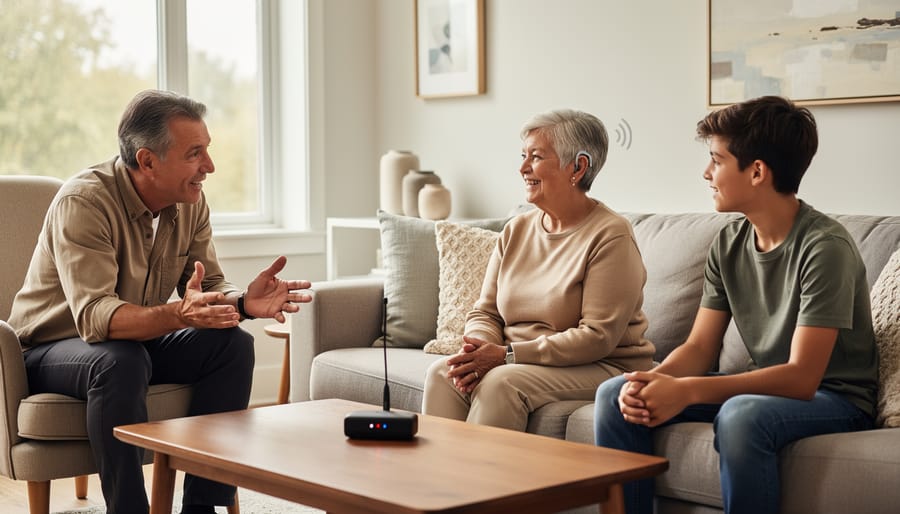
Assistive listening devices help you hear by delivering sound straight to your ears instead of letting it travel across a noisy room. A microphone picks up the sound you want, whether that’s a voice, a TV, or a phone, and sends it to you through a headset, speaker, neckloop, or your own hearing device. Because the sound starts close to you, background chatter and distance matter much less.
Hearing aids make all the sounds around you louder. Assistive listening devices do something different: they focus on one source and carry it to you clearly. Many people use both together. Others, especially those with severe to profound hearing loss, rely on them where hearing aids alone fall short.
A few terms come up often. “Streaming” means sound travels wirelessly, usually by Bluetooth, from a TV or phone to your ears. A “telecoil” is a tiny built-in coil in many hearing aids and cochlear implants that picks up signals from loop systems and compatible phones.
These devices can help in many situations:
– Severe to profound hearing loss: extra clarity when amplification alone isn’t enough
– Children: clearer speech in classrooms and at home
– Older adults: easier conversations, TV time, and phone calls
– Caregivers: less repeating and more relaxed time together
Key Buying Factors to Weigh Before You Choose
Matching a Device to Your Daily Life
Start with the moments that feel hardest, because those point to the device that will help most. Here’s how common situations tend to line up.
Watching TV: Many people find the dialogue gets lost in the soundtrack. A TV listening system sends the audio straight to you, so you can set your own volume without disturbing anyone else.
Phone calls: If voices sound muffled, a captioned or amplified phone can turn calls from stressful into manageable.
Family dinners: Noisy tables are tough. A small remote microphone placed near the speaker helps you follow the conversation.
Workplace meetings and classrooms: A remote microphone or wireless system carries the speaker’s voice past room echo and distance.
Worship services and theaters: Many venues have hearing loops, so check for the loop symbol and ask staff how to connect.
Travel: Look for portable, rechargeable options, plus a vibrating alarm clock so you never worry about missing a wake-up call.
Jot down your top two or three situations. That short list will shape every choice that follows.
Compatibility and Connectivity Questions
Connection types can feel confusing, but each one does a simple job. Bluetooth sends sound wirelessly from a phone, tablet, or TV straight to your hearing aids or implant, much like connecting to a speaker. A telecoil is a tiny built-in coil that picks up sound signals from loop systems and compatible telephones. What a telecoil is is easiest to picture as a small antenna that delivers clear sound with less background noise. Wireless streaming is the broader idea: sound travels through the air from a transmitter, such as a TV adapter or remote microphone, directly to you.
Why does compatibility matter? Not every device speaks the same language as every hearing aid or implant, and a mismatch can mean a purchase that simply won’t connect. Before buying, check which features your hearing device supports, and ask whether it has a telecoil turned on. An independent hearing professional can confirm this in minutes, helping you avoid frustration and choose a device that works the first time.
Types of Assistive Listening Devices Compared
Devices for Home and Family Life
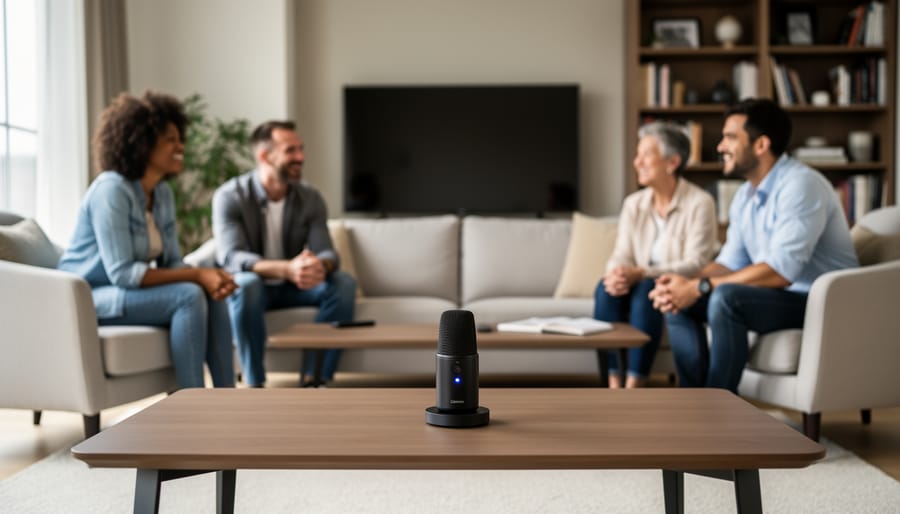
Home is where hearing can be most relaxing, and also most frustrating. A few well-chosen devices can bring back the TV, the phone, and dinner-table conversation.
| Device type | How it works | Best everyday use | Key consideration |
|---|---|---|---|
| TV streamer | Sends TV sound straight to headphones or your hearing aids | Evening viewing at your own volume | Check compatibility with your hearing aids |
| Captioned or amplified phone | Shows words on screen and boosts the caller’s voice | Calls with family and appointments | Needs a phone line or internet connection |
| Alerting system | Uses flashing lights or vibration for doorbells and alarms | Safety at home, including overnight | Place units in the rooms you use most |
| Personal amplifier | Picks up a speaker’s voice and delivers it to your ear | Conversation around the table | Works best at short range |
None of these replace good habits. Pairing a personal amplifier with simple communication strategies like facing the speaker and reducing background noise, makes family meals far easier to enjoy.
Devices for Work, School, and Public Spaces
Away from home, the goal is hearing one voice clearly over distance and noise. A remote microphone clips onto a teacher or colleague and sends their voice straight to your hearing aids, cochlear implant, or a headset. FM and digital wireless systems work the same way and suit classrooms, meetings, and group tours, where one speaker talks to many listeners.
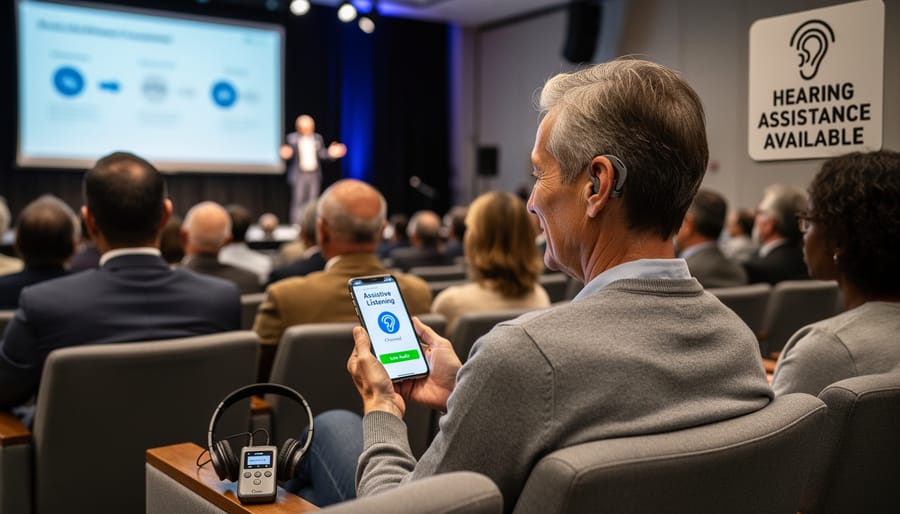
Hearing loops are different. A wire around a room sends sound to the telecoil (a tiny built-in coil) in many hearing aids and implants. You simply switch to the “T” setting, with no extra gear to carry. Look for the blue ear-and-“T” symbol at theaters, houses of worship, and service counters. A quick call ahead helps too, and the guidance on ADA assistive listening venues explains what to ask for.
For work or school, request accommodations early and in writing. A hearing professional can help you choose the right system and test it with your devices.
Recommendations: Which Option Fits Which Situation
The best choice depends on the moment you want to improve, so think in situations rather than brand names. Models change often, and what suits one person may frustrate another.
Evening TV viewing. A TV streaming system sends sound straight to your ears or hearing devices, so you can set your own volume without disturbing anyone else in the room.
Group conversations. A remote microphone, a small mic worn or placed near the speaker, helps you follow dinners, meetings, and family gatherings by lifting voices above background chatter.
Phone calls. A captioned phone shows the words on a screen as the other person talks, which takes much of the strain out of calls.
Safety at home. Vibrating alarms and flashing doorbells make sure you notice smoke alarms, knocks, and wake-up times, even when you aren’t wearing hearing devices.
Public venues. Many theaters, places of worship, and service counters have hearing loops, which send sound directly to a telecoil-equipped hearing device.
If you’re a caregiver, look for options that are simple to operate and easy to charge, so the device gets used rather than left in a drawer. For parents of children with hearing loss, durability, comfort, and compatibility with classroom systems matter just as much as sound quality.
Because every household is different, an independent professional can demonstrate several options side by side and recommend a combination that fits your routines. That kind of guidance replaces guesswork with confidence.
What Fitting and Support Services Look Like
Good fitting and support services turn a device from a box of parts into something that works in your daily life. Here is how the process usually unfolds.
Step one: a conversation about your listening needs. You talk through where you struggle most, whether that’s the TV, phone calls, family gatherings, or the classroom. Your hearing history, any hearing aids or cochlear implants, and your budget all shape what comes next.
Step two: a hands-on demonstration. Instead of guessing from a product page, you try options in a real setting. You hear the difference a remote microphone or TV streamer makes, and you can say plainly what feels comfortable and what doesn’t.
Step three: fitting and programming. Your professional pairs the device with your hearing aids or implants, adjusts volume and sound settings, and checks that everything connects reliably. This is where small tweaks make a big difference.
Step four: training for you and your family. Learning to charge, connect, and troubleshoot a device is easier with someone beside you. Caregivers and family members are welcome to join, so everyone feels confident.
Step five: follow-up adjustments. After a few weeks of real-world use, you return to fine-tune settings and answer questions that only come up in daily life.
Independent professionals add real value here. They aren’t tied to a single brand, so they can draw on technology from many manufacturers and recommend what suits you. They also keep their knowledge current, which means you can learn about the latest hearing tech as it becomes available.
Support doesn’t end after the fitting. As technology evolves and your needs change, you can return for updates, new accessories, or a fresh look at your setup.
Common Mistakes to Avoid When Buying
A little planning up front saves a lot of frustration later. These are the most common stumbling blocks, each paired with an easy way around it:
- Buying online without checking compatibility: confirm that the device works with your hearing aids or implants before you order.
- Choosing on price alone: compare what each option actually does for your daily listening, then weigh the cost.
- Skipping a trial period: ask for a hands-on demonstration or a return window so you can test it at home.
- Overlooking setup and training: book time for a walkthrough so you and your family feel confident from day one.
- Ignoring comfort and ease of use: pick something you’ll happily reach for every day, not something that sits in a drawer.
- Not planning for follow-up care: arrange adjustments and check-ins as your needs change.
Reaching out sooner rather than later also helps. If your hearing aid isn’t working the way you hoped in certain settings, that’s a good moment to ask about added support. An independent hearing professional can look at the whole picture with you, with no pressure toward any one brand.
Frequently Asked Questions About Assistive Listening Devices
Can I use these devices with hearing aids or cochlear implants?
Often, yes. Many devices connect through Bluetooth or a telecoil, which sends sound straight to your hearing aid or implant. Before you buy, check compatibility with your specific model, or ask your hearing professional to confirm it for you.
Are assistive listening devices covered by insurance or funding programs?
Coverage varies a lot by plan, region, and device type. Some programs help with certain devices, while others don’t. A hearing professional can point you toward the options that may apply to you.
Can children use them?
Yes, many devices work well for children, especially remote microphones and wireless systems used at school. A professional can recommend settings and fits that are comfortable and safe for young listeners.
How long do they last, and what if my needs change?
Lifespan depends on the device type, how it’s cared for, and how quickly the technology moves on. If your hearing or daily routine changes, a follow-up visit can adjust your current device or help you move to a better fit.
Where can you get help setting one up? An independent hearing professional is a great place to start. They can talk through your listening needs, demonstrate several options, program the device, and show you and your family how to use it with confidence. You don’t have to figure it out alone.
If there’s one thing to take from this guide, it’s that the best assistive listening device is the one that fits your life. It might be a TV streamer for relaxed evenings, a remote microphone for family dinners, a captioned phone for calls, or a hearing loop that makes a place of worship feel welcoming again. There’s no single right answer, and you don’t have to figure it out alone.
What makes the biggest difference is expert fitting and ongoing support. A hearing professional who isn’t tied to one brand can demonstrate your options, set everything up, and show you and your family how to use it with confidence. Needs change, and good support changes with them.
When you’re ready, reach out to an independent hearing professional through We Hear You. You’ll get personalized guidance and a clear next step, at your own pace.