
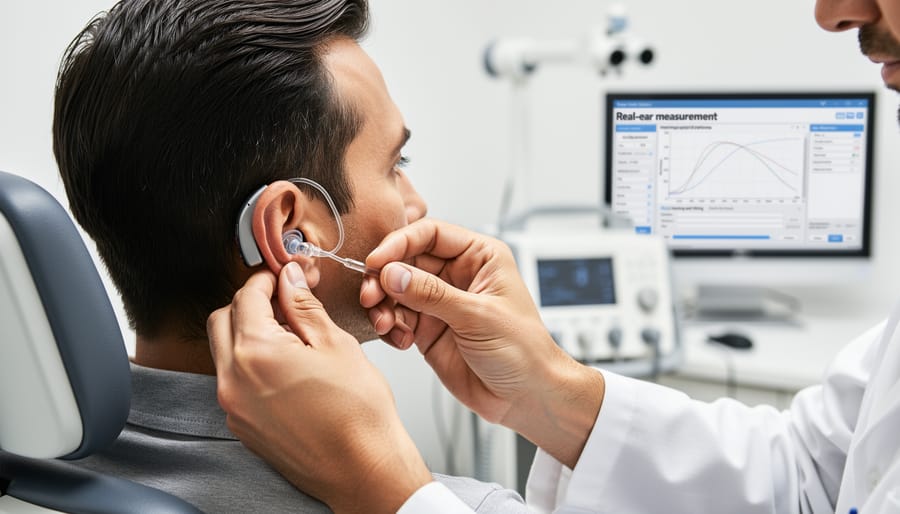
A real ear measurement system checks, in your own ear, what your hearing aids are actually delivering. A tiny soft tube sits near your eardrum while the aid plays a test sound, and the system reads back the exact volume at every pitch. It takes about 10 to 15 minutes and doesn’t hurt. The result tells you whether your aids match the prescription built from your hearing test, or whether they’re quietly falling short.
That matters more than most people realize. Every ear canal is shaped differently, so two people wearing the same aid, set the same way, can hear very different things. Without this check, settings rely on a computer’s estimate of an average ear, not yours.
This guide explains how these systems work, what separates a good one from a basic one, and what to look for in a provider who offers independent, expert verification. You’ll also see how the main system types compare, what to expect at your visit, and the common mistakes worth avoiding.
What Real-Ear Measurement Does and Why It Matters
Who Benefits Most from Verification
Real-ear measurement can help almost anyone who wears hearing aids, but it makes a real difference in a few situations:
- You’re new to hearing aids and want a comfortable, well-matched starting point.
- Your devices sound too quiet, too loud, or unclear, even after a few adjustments.
- You or your child can’t easily describe what sounds right, including some people with developmental or physical disabilities.
- Your hearing is changing through different life stages, including hormonal shifts for many women.
First-time users often don’t yet know what “good” sounds like, so verification gives them a solid foundation. If you’ve ever felt your hearing aids just aren’t doing what they should, a measurement can show whether the sound reaching your eardrum matches what was intended. That’s where personalization changes everything.
For children and adults who may not be able to tell you what they hear, the test offers objective answers, no explanation required. And because hearing can shift over time, a quick check at each stage helps your aids keep up with you.
Key Buying Factors When Choosing a Verification Service
Questions to Ask Before You Book
Walking into a first appointment with a few questions in hand can make the whole experience feel calmer. You don’t need to know the technical details. Simply asking the right things helps you find a provider who truly puts your ears first. Consider bringing these along:
– How often do you perform real-ear measurement, and is it part of every fitting and adjustment?
– Will you show me the results and explain them in plain language?
– How do you keep your skills and equipment current?
– Are you independent, or tied to one hearing aid brand?
– What follow-up care is included if something doesn’t feel right?
– What will the visit cost, and what does that price include?
If a provider welcomes these questions and answers them openly, that is a good sign. Independent professionals tend to enjoy the conversation, because clear communication is part of good care. Here are a few common questions people ask when they call.
Does it hurt?
No. A soft, thin probe sits comfortably in the ear canal, and most people simply notice some test sounds playing.
How long does it take?
The measurement itself usually takes just a few minutes, and your provider can make adjustments right away based on what they see.
Is it only for new hearing aids?
Not at all. It can also be helpful if your current devices feel off, or when your hearing or settings change.
Do all providers offer it?
Not every provider does, so it is worth asking directly before you book.
Once you have those answers, you’ll feel more prepared to choose with confidence.
Types of Real-Ear Measurement Systems and Verification Approaches Compared
Not every verification method works the same way, and the differences affect how closely your hearing aids match your ear. Here are the three main approaches, explained simply.
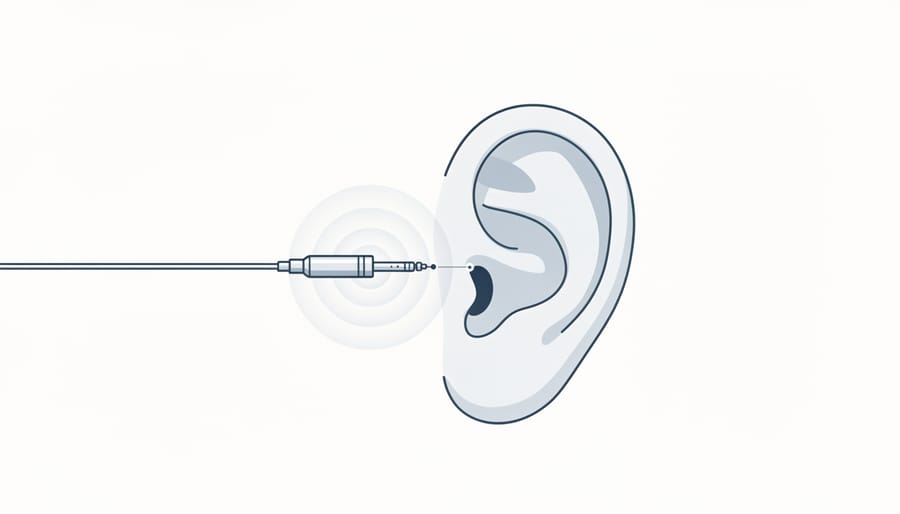
A dedicated real-ear measurement system uses a probe microphone, which is a very thin, soft tube with a tiny microphone at its tip. It rests in your ear canal near the eardrum while the hearing aid plays test sounds. The provider then compares what your ear receives to a target, which is the recommended amount of sound boost for your hearing loss. This is the only approach that measures inside your actual ear, so it is the most accurate. The tradeoff is that it takes a few extra minutes and requires equipment that is properly calibrated.
Some fitting software includes built-in tools that estimate the sound delivered by your hearing aids. These can be handy for quick adjustments and give a helpful starting point. However, they rely on averages for ear size and shape rather than your own measurements.
The third approach uses simulated or estimated measures. These predict what the hearing aid should do based on typical ears. They require no probe, but they cannot account for the ways your ear differs from the average.
| Approach | How it works | Accuracy in your own ear | Best suited for |
|—|—|—|—|
| Dedicated probe microphone system | Measures sound near your eardrum while the aid plays test sounds | Highest, since it tests in your actual ear | Every fitting and any adjustment |
| Built-in fitting software tools | Estimates output using the aid’s programming | Moderate, based on typical ear averages | Quick checks and initial settings |
| Simulated or estimated measures | Predicts results from average ear models | Lowest, since nothing is measured in your ear | A rough starting point only |
Advanced technology makes the most precise option easier than ever. Modern systems display results instantly on screen, so adjustments can be made and rechecked on the spot. If you’re curious how this fits into the latest hearing tech, it’s a great example of technology helping a provider customize your hearing aids to you.
What a Good Verification Visit Looks Like
A good verification visit is calm, quick, and easy to follow. Knowing the steps ahead of time can make the whole thing feel familiar before you even sit down.
First, your provider will take a brief look into your ear with a small light. This confirms the ear canal is clear and comfortable for testing. Next, a thin, soft probe tube is placed gently in your ear, close to the eardrum. You may feel a light touch, but it shouldn’t hurt. Your hearing aid then sits in the ear alongside the probe.
Once everything is in place, the system plays test sounds, such as gentle tones or speech-like noise. You don’t need to do anything except sit still and relax. A screen shows the sound your ear is actually receiving, and a good provider will walk you through it in plain language, showing how your hearing aids compare to the goals set for your hearing. If something falls short, small adjustments are made right then, and the test is often repeated to confirm the change worked.
Caregivers play a helpful role here. You can sit nearby, offer reassurance, and help describe what a loved one notices in daily life, especially if they find it hard to put sounds into words. Verification works best alongside honest feedback about how things sound at home, so don’t hold back your observations.
Our Recommendations: Matching the Service to Your Situation

The right provider depends on where you are in your hearing journey, but a few principles hold for everyone. Look for someone who verifies at every fitting, explains the results in plain language, and stays current with technology. Independent professionals, like the team at We Hear You, are a good example of this approach, because their advice isn’t tied to a single brand.
Here is how that plays out in common situations:
- First-time user: choose a provider who runs verification at your very first fitting, so your starting point is built around your ear.
- Upgrading devices: ask for a fresh measurement with the new aids, since settings from your old pair won’t carry over.
- Caregiver-supported fitting: bring a family member or friend who can share what they notice and ask questions with you.
- Hearing aids that never felt right: request a verification check, which often reveals why sound seems too quiet, too sharp, or unclear.
If you’re supporting a loved one, especially someone who can’t easily describe what they hear, verification is even more valuable. Measured results give the provider objective information to work from. It’s also worth asking the provider to show you the results on screen and explain what they mean. A good professional will happily do this.
Hearing needs change over time, so consider a follow-up verification whenever your hearing changes or your devices are updated. Everyday listening situations matter too. Talking with someone in a mask, for example, can feel very different from a quiet one-on-one chat, and our guide on face masks and hearing offers helpful context. Sharing these real-life challenges with your provider helps them fine-tune your hearing aids for the moments that matter most to you.
Common Mistakes to Avoid with Hearing Aid Verification
Even with the best intentions, a few common missteps can keep hearing aids from performing as well as they could. The good news is that each one has an easy fix.
Assuming every fitting includes verification. Not every appointment includes a check inside your own ear. Instead, ask at the start whether real-ear measurement will be part of your fitting.
Relying only on comfort or first impressions is another one. Hearing aids that sound pleasant in the office may still be missing sounds you need for conversation. Pair your own feedback with measured results, so both your experience and the data guide each adjustment.
Skipping follow-up visits is easy to do, especially once things seem “good enough.” Your brain keeps adapting for weeks, and small refinements often make a big difference. Booking a follow-up before you leave the first visit keeps you on track.
Choosing based on price alone can also lead you astray. A lower price may not include verification, adjustments, or ongoing support. Compare what each service actually covers, then weigh the full value of care alongside the cost.
Not asking to see or hear the results explained is a missed opportunity. The measurements are about you, and you deserve to understand them. Ask your provider to walk you through the results in plain language. It can also help to learn how to navigate hearing aid services with confidence, so you know what to expect at each stage.
Finally, delaying a check when hearing aids don’t feel right can prolong frustration. If something sounds too quiet, too sharp, or just off, reach out sooner rather than later. A quick verification visit can often put things right.
Hearing aids work best when they’re set for your ear, not an average one. That’s what real-ear measurement offers: a quick, comfortable check that shows what you’re truly hearing, so adjustments can be made with confidence rather than guesswork.
At your next appointment, don’t hesitate to ask about Real-Ear Measurement Hearing Aid Verification Services. Ask to see the results explained in plain language, and share how everyday listening feels to you. You, and the people who support you, deserve devices that fit your life as well as your ear.
If you’d like personalized guidance, the independent professionals at We Hear You are happy to help. Whenever you’re ready, reach out and take the next step toward clearer, more comfortable hearing.